A divided community response has reshaped the future of the proposed Boorowa–Galong Rail Trail, with Hilltops Council stepping back from direct oversight following debate at its March ordinary meeting.
Councillors resolved to dissolve the internal steering committee set up to guide the rail trail, shifting responsibility for its next stage back to the group that initiated the idea, Boorowa Galong Rail Trail Inc.
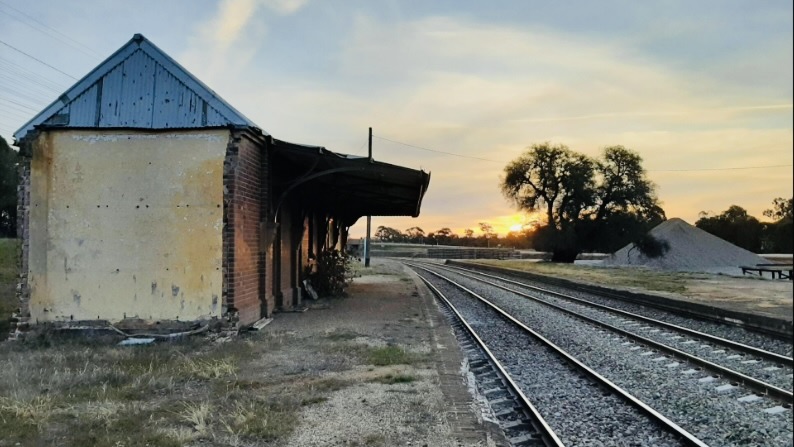
The rail trail would repurpose the 27-kilometre disused corridor between Boorowa and Galong as a shared walking and cycling route, with an estimated price tag of $11.54 million.
It’s been in the pipeline since 2021, when the Boorowa Galong Rail Trail committee formed and raised tens of thousands of dollars to fund early studies.
Council later established its own steering committee to help move the idea forward and, in October 2024, formally backed a lease application for the corridor with Transport for NSW before moving to test community sentiment.
That process – required under the NSW Rail Trail Development Framework, which demands demonstrated community support, resolution of biosecurity and planning issues, and a viable business case – drew 566 online survey responses, 35 written or emailed submissions, and directly engaged 90 people at drop-in sessions held in Boorowa and Galong in February.
The feedback showed a community deeply split.
Overall, 53 per cent of respondents strongly supported the rail trail, compared with 29 per cent who strongly opposed it, while only a small proportion remained neutral.
Those headline figures, however, masked a sharp divide between local residents and people outside the region.
Support was strongest among respondents living outside the Hilltops local government area, while opposition was much stronger among those closest to the project.
In Boorowa, nearly half of respondents strongly opposed the idea, compared with 27 per cent who strongly supported it.
In Galong, views were more evenly divided, with 42 per cent strongly supporting the trail and 39 per cent strongly opposed.
Among those living adjacent to the corridor, opposition was most pronounced – around 62 per cent strongly opposed the trail, with only 19 per cent strongly in favour.
When asked whether the trail would benefit the community, responses followed a similar pattern.
So too did intended usage – visitors and those living outside the region said they were most likely to use the trail for recreational cycling or walking, while residents of Boorowa, Galong and those adjacent to the corridor indicated they would rarely or never use it.
Overall, 39 per cent of respondents said they would rarely or never use the trail if built.
Economic viability and cost transparency emerged as central concerns, with many respondents questioning visitation assumptions, long-term maintenance obligations and council’s potential financial exposure.
Landholder impacts were also a major focus, particularly around biosecurity, fencing, water access and the potential disruption to existing farming operations.
Safety, governance and trust in decision-making were recurring themes, as were questions about who would ultimately be responsible for funding, management and liability.
Supporters, meanwhile, pointed to a range of potential benefits – increased tourism, improved liveability, health and wellbeing outcomes, and new opportunities for local businesses.
Safe road crossings, privacy protections for adjoining farms, and visitor amenities such as toilets, water and parking were identified as the top design priorities should the project proceed.
Rail trails in other regional areas – including the Rosewood to Tumbarumba Rail Trail – have shown how disused corridors can be turned into tourism and recreation assets that draw visitors and support local economies.
A 2022 feasibility study commissioned by Boorowa Galong Rail Trail Inc found the trail to be technically feasible and economically viable, with the potential to generate about $2.9 million a year in additional economic activity for the region.
One respondent said the trail could revitalise Galong, suggesting it could help reopen the Royal Hotel, support new businesses and attract visitors.
Others were unconvinced, with one submission stating it would bring little benefit to either town while imposing significant costs and impacts on property owners.
During the March council meeting, councillor Tony Flannery, a Galong landholder, moved a motion to allocate $7500 from the council’s tourism budget to further investigate a potential Galong loop, but it was defeated.
Rather than abandoning the rail trail entirely, council endorsed a model under which it will now be progressed independently by Boorowa Galong Rail Trail Inc.
The group will be responsible for advancing the next steps identified through the feedback process, working through key concerns and trying to build broader community confidence.
For Boorowa Galong Rail Trail Inc, that means pursuing a staged, evidence-led approach – potentially including pilot sections or partial alignments to test benefits before committing to full corridor delivery – alongside further feasibility work, stronger governance and funding clarity, and continued direct engagement with adjoining landholders.
The group is expected to report back to council within 12 months.
Council has indicated it remains supportive of initiatives that strengthen community engagement and regional growth, while acknowledging the community will now determine the rail trail’s future direction.
Edwina Mason
About Regional
https://aboutregional.com.au/hilltops-council-steps-back-as-boorowa-galong-rail-trail-debate-divides-community/504031/
20-apr-2026
