Acknowledgement of Country
This document acknowledges the traditional custodians of the land on which we work and live. We pay our respects to Elders past and present and celebrate the diversity of Aboriginal people and their ongoing cultures and connections to the lands and waters of NSW.
Many of the transport routes we use today – from rail lines, to roads, to cycleways – follow the traditional songlines, trade routes and ceremonial paths in Country that our nation’s First Peoples followed for tens of thousands of years.
Traditional Songline for New England
Train Songline, in Anaiwan Language
King Malawangi, 1883
Frank Archibald, 1962
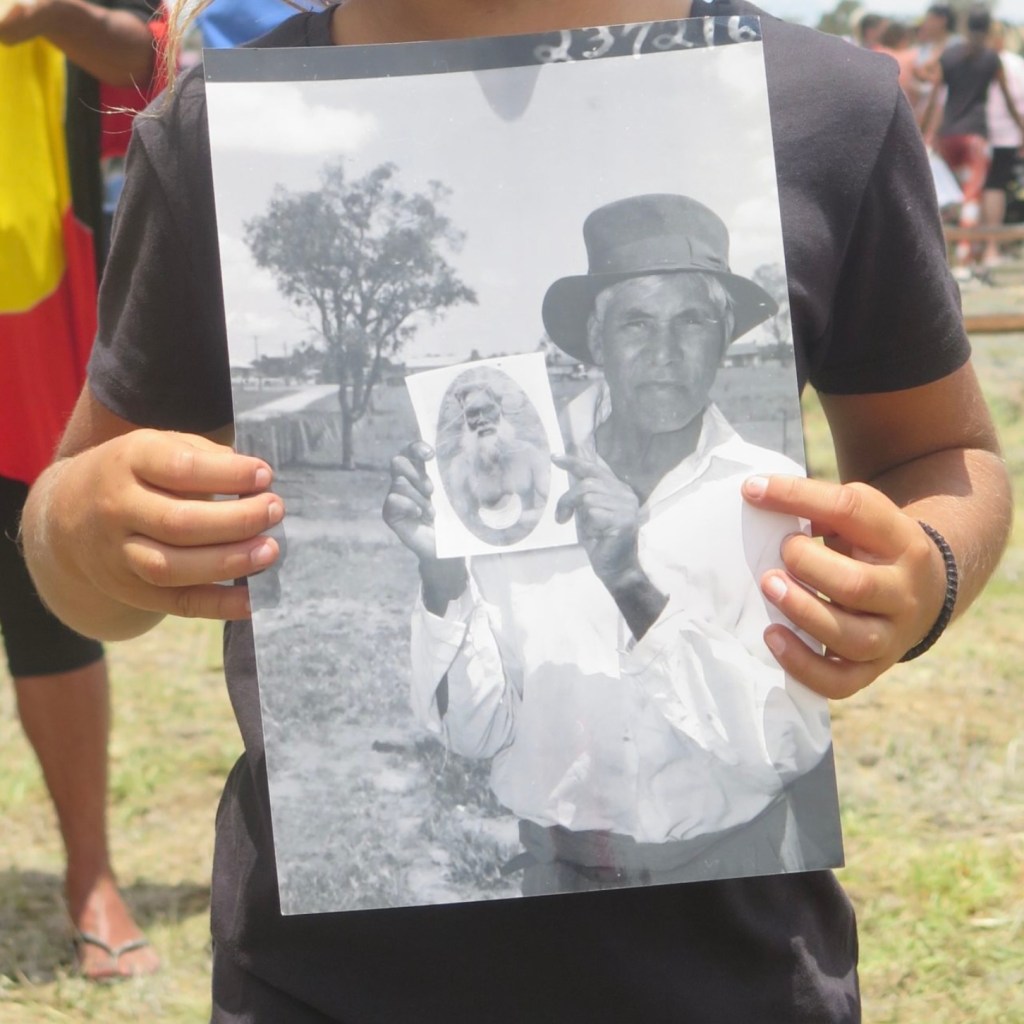
King Malawangi (King Bobby / King Robert) witnessed a train steaming noisily along the Great Northern Railway (GNR) in the 1862. The news of it was passed orally onto other groups in the area by singing a song called “Wanglagee Wannla, Gov Go”, which tells about a new fast moving noisy machine that had many turning wheels, puffing out steam and ringing its bells. They called it the Iron Sepernt.
His son, Frank Archibald, recorded this important fragment of oral history for the first time in 1962, in the Anaiwan language. It is now also known as the “Armidale Train Song“.
Pirra ngurru, banggara
Warri galagi’ i way irri gala gabman gu
Ngarri irri gupirri yarri
Mi arri may irri gabmanggu
Warri galagi’ i way irri gala gabman gu
Bell bell bay irru birri irri layiru
Mi arri may irri gabman gu
Warri gala gi ‘i way irri gala gabman gu
Ngarri irri gupirri yarri
Mi arri may irri gabman gu
Hodddinott Collection, University of New England
[ TAPE GA ‘ WONGGALADJI’ ] WANGLAR GEE
Frank Archibald, 1962.
A Vision from an Indigenous Local Elder
The NETP is committed to honour First Peoples’ cultural and spiritual connections to the New England region and their rich contribution to our modern society.

The Train North Rail Indigenous Participation Plan (TNRIPP) will ensure local communities can share in ongoing employment opportunities of the transformation rail-track's roll- out and operations.

The 210 km from Armidale to Wallangarra, as a nation building rail route, is expected to deliver an estimated 150 direct and 500 indirect jobs per year, once operational, while moving products to domestic and export markets faster and more cost effectively.

The TNRIPP is implemented by the Australian Rail Track Corporation (ARTC) and backed by the Federal and NSW governments. It will ensure Aboriginal and Torres Strait Islander people can share in the local benefits of this once-in-a- generation infrastructure project will generate.

The New England Transport Plan (NETP) focuses on workforce targets being implemented. such as the Armidale to Wallangarra section, where a construction contractor is expected to set a minimum workforce target of 50% local employment; including a goal of 10% Aboriginal employment.

This section of the $450 million TNRIPP is expected to create about 100 opportunities for local residents; including up to 20 jobs for local Aboriginal people.

The Deputy Prime Minister and Minister for Infrastructure, Transport and Regional Development  welcomed the TNRIPP as it will enhance the New England Network's (NEN) grass roots focus to benefit regional communities.

The TNRIPP testifies the Australian Government's commitment and strategy to empower local jobs and drive social and economic opportunities throughout the Inland Rail's construction and future operations.

The transformational TNRIPP is about more than just building a 210 km rail line - it is about opening new and exciting social and economic opportunities for inland Australia.

The TNRIPP activity will deliver about ,1000 direct and indirect jobs - not just through construction, but also those that flow- on from construction - and Aboriginal and Torres Strait Islander communities are essential part of this prime outcome

The Minister for Finance and Public Service, will have a clear and accountable employment targets that will ensure the TNRIPP's benefits are returned to local economies and communities.

Local employment and Indigenous employment are critical to maximising the local benefits of the TNRIPP and ensuring regional communities are front and centre of this developing success story.

The TNRIPP will facilitate industry and business investment in local communities and is forecast to boost Australia's GRP by $2.3 billion.

It will deliver economic opportunities for regions by moving food and fibre between Sydney and Queensland in larger volumes on double - stacked trains and more cost efficiently.

This means more money in the pockets of local farmers. businesses and communities, including Aboriginal and Torres Strait Islanders who will also re- invest that money back into rail transportation Australia.

The Minister for Indigenous Affairs will enhance employment opportunities for Indigenous adults as a crucial priority for the Australian Government.

The TNRIPP is exactly the sort of initiative which assisted the Federal government's goal of encouraging and delivering more jobs for Aboriginal and Torres Strait Islander families throughout the 210 km track, while working with the private sector.

This TNRIPP is about creating opportunities for Aboriginal people - whether through training, employment, or procurement services - to participate in the transformational Trains North Rail Infrastructure Project.

Every person employed or trained through the TNRIPP will develop new skills and expertise which will enhance their future, long - term employment opportunities and strengthen the capacity of their local communities.


Kerry Bulloojeeno Archibald Moran
Great Grand daughter of King Malawangi
Grand Daughter of FRank Archibald
Indigenous Matriarch and Elder
Silver City Aborigine Reserve
Ainawan Country
Armidale NSW 2350
Australia

16-apr-2025
Rick Banyard
Project Director
New England Network
28-apr-2025
