The New England Network (NEN) is an extensive group of established local community associations, which have both formal and informal structures. The individuals who make up the NEN passionately share a common aim of improving the quality of life in the New England region of northern NSW, through a dframatic improvement in public transport and other benefits that will flow from it.
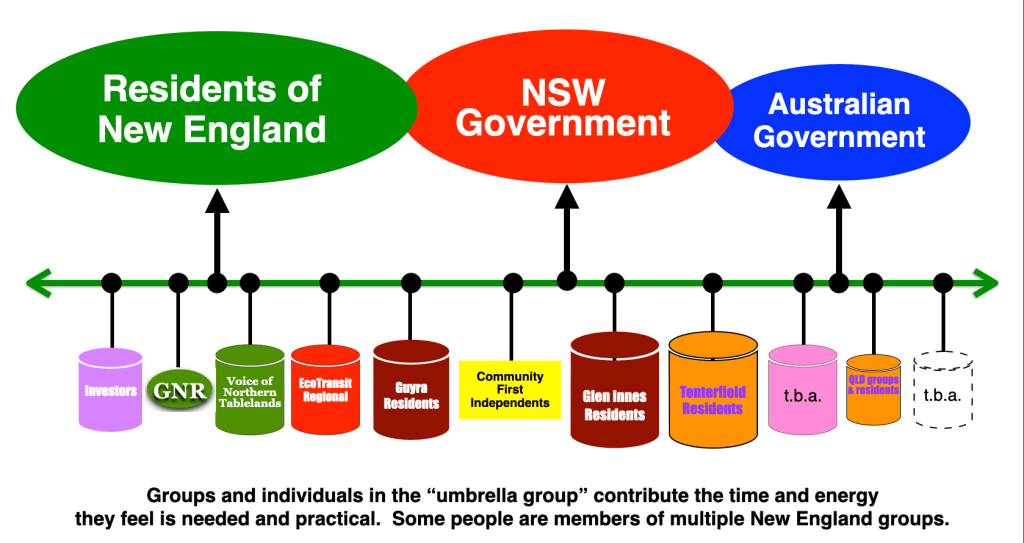
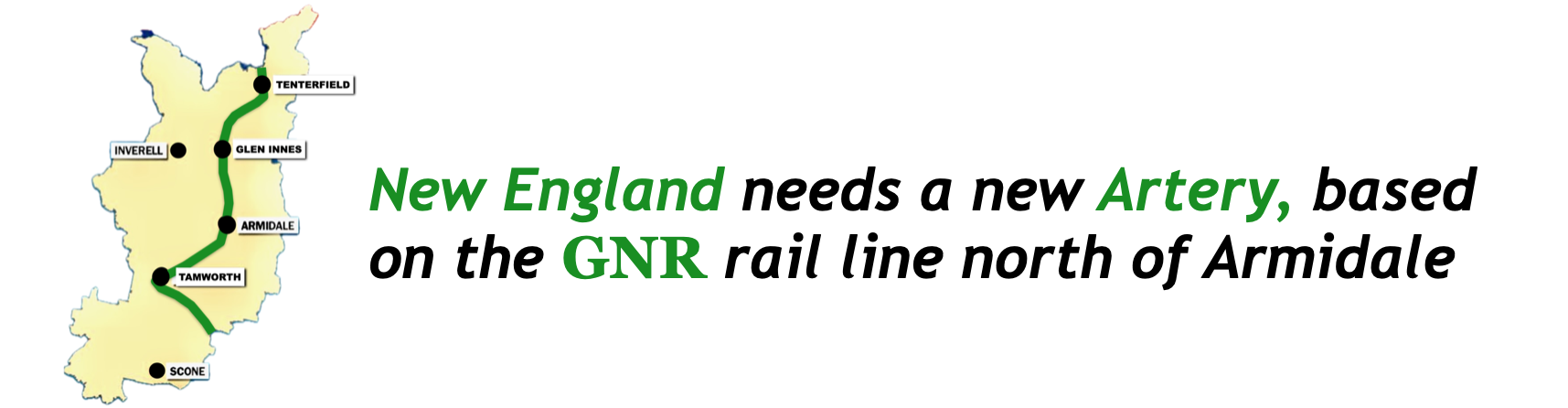
The NEN was established to collect relevant information and feedback from the local community, into a single document, about how re-activating the Great Northern Railway (GNR) will benefit the residents of New England, but also the NSW and national economies. The GNR. railway will become again a backbone for dramatic improvements, for so many aspects of live in the New England region. It is far more than just freight and passenger rail services between Armidasle at Wallangara QLD.
Furthermore the NEN team see great long term advantages from a secondary east-west rail corridor be developed to connect Moree to Grafton, via Inverell and Glen Innes.
These rail corridors can be justified from the saving alone of moving freignt off the roads to rail.ery little extra cost, once the GNR line is re-activated for freight by rail services. Passenger services will be a huge bonus, for for little extra cost to the private sector, NSW or the federal governments. . Heritage trains would also use the corridor to boost tourism along the north south backbone offered by the GNR line.
The corridors should make use of the existing railway infrastructure as much as possible. Where practical walking/cycling traisl can be accommodated along the side of the rail corridor, also known as off-formation, to stimulate growth of tourism, visitors and facilities needed along the walking/cycling routes. Restored and active ail stations make great locations for tourism nodes – cafes, hiring bikes, and information on local accommodation for walkers/cyclists who do not want to camp out.
Having 2 active the two rail corridors north-south and east-west will provide: –
- An additional rail connection between NSW and QLD, which ensures redundancy when the Sydney-Grafton-Brisbane route is flooded or subject to a lengthy stoppage due to an accident or mechnaical failure,
- A west – east rail connection between the New England tablelands and north coast near Grafton or Coffs Harbour,
- At least two very important rail network loops, which are what is needed for the longterm economic success of a rail line,
- Greatly improved resilience and disaster recovery for freight and passenger services between various parts of QLD to Newcastle and Sydney.
The New England region has very few route service buses at present. These are complemented by school charter buses that greatly assist in getting pupils to the region’s schools on a daily school day basis. Ther are some limited Community Transport services.
Taxis, bikes and walking are also limited options, mainly within towns and the city of Armidale.
Commercial aircraft provide some services to and from Armidale, Tamworth and Inverell airports. However the cost of airfares is a major constraint on how many people use planes to commute to Sydney, Newcastle, Brisbane or the Gold Coast.
This New England Transport Plan provides an overview of the current transport offering, its transport needs, and identifies options to improve all forms of transport.

There is a separate Section on viability in this Plan.
Major and minor transport recommendations are provided to expand the social and economic benefit for the community in the New England region. These recommendations improve the liveability of the New England region. Boosting visitor numbers and tourism and local entertainment are important Objectives of the New England Transport Plan.
Rick Banyard
Project Director
New England Network
5-may-2025
