Cars and Trucks
Cars and trucks are clearly the major form of transport in the New England region with the New England, Gwydir, Oxley and Bruxner Highways. These are the major arteries that connect New England region to Tamworth in the south, Brisbane and Toowoomba in the north, Moree in the west and Grafton in the east
The Region had 25,191 cars and 1,582 motorbikes, according the the 2021 Census.
| New England Region Motor Vehicles | ||
| Source ABS Census data 2021 Extrapolated | ||
| Vehicle Type | Number | |
| Passenger Vehicles | 25191 | |
| Campervans | 174 | |
| Light Commercial | 5935 | |
| Light Rigid Trucks | 346 | |
| Heavy Rigid Trucks | 600 | |
| Articulated Trucks | 153 | |
| Non Freight Vehicles | 38 | |
| Buses | 148 | |
| Motor Bikes | 1582 | |
| Total | 34167 | |
| Vehicles per Household | 1.9 | |
Table Registered road vehicles in New England
Journeys to work are very low.
| Area | Journeys by car | Journeys by walking |
| Region | ||
| Armidale | 26 | |
| Glen Innes | 10 | |
| Tenterfield | ||
| Inverell | ||
| Uralla | ||
| Walcha |
Table showing journeys to work for major towns
Trucks are common and range from light, rigid to heavy combination, multi trailer units. The trucks carry farm supplies, agricultural produce household goods and industry raw materials and products. Livestock, meat, grain and fertiliser are among the major volumes.
The New England Highway A15 is a major corridor for the interstate trade of fruit and vegetables mostly to Capital city markets and distribution centres.
| Truck Type | Tenterfield | Glen Innes | Armidale | Total |
| Ridgid | ||||
| Articulated | ||||
| Multi Trailers | ` | |||
| Total Heavy Vehicles |
Truck numbers using the New England Highway.
Road train types:
A: B-double
B: B-triple
C: A-double
D: AB-triple (possible BA)
E: BAB quad
F: ABB quad
G: A-triple
H: AAB quad (possible BAA)
K: Special Australian mining tipper road train with limited transportation
Table A guide to heavy vehicles
Railways
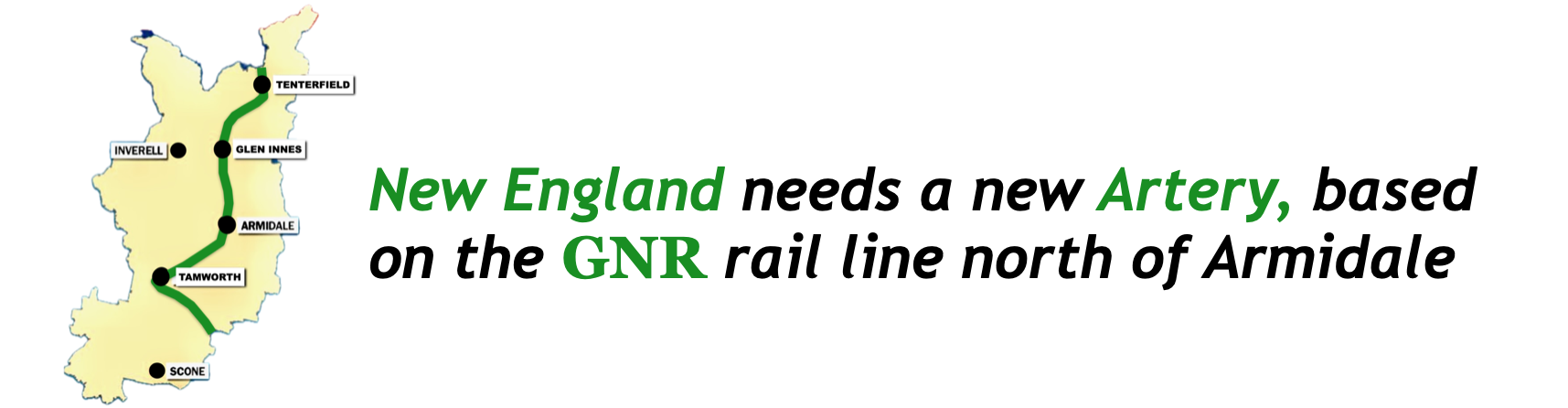
Railways are part of the history of the New England that allowed it to develop originally. They were rolled out with great enthusiasm and public support by the NSW Government in the 19th century. The Great Northern Railway (GNR) began from Newcastle and progressed up the Hunter Valley, passing through the Ardglen Tunnel at the Liverpool Range in 1876. It proceeded to Werris Creek in 1879, to Tamworth in 1881, before reaching Armidale in 1883. It was extended to Glen Innes on the 19-aug-1884. The GNR line was completed to Wallangarra in 1887, where it connected with narrow gauge QLD trains from Warwick. Passengers had to change trains there because of the difference between NSW standard track gauge and the 3’6″ gauge used in QLD.
At some stage the NSW Govt renamed the GNR line as the Main North Line.
Armidale has been the most northern station on the Main North Line since ___. The last regular services to operate north of Armidale was the Northern Mail which ceased in November 1988. Freight services continued to serve a fertiliser depot at Dumaresq until the mid-2000s. No trains have travelled on the GNR line north of Armidale since ____?
The Main North Line was the only rail link between Sydney and Brisbane, until ____.
Heritage trains continued to run from various QLD locations to Wallangarra until the 31-oct-2023. They were stopped when severe bushfires damaged the steel tracks and five bridges. Work is now underway in QLD to repair the line and allow heritage trains to again run.
Although the opening of the GNR occurred on 30 March 1857, political indecision in the 1870s, hampered efforts by Engineer-in-Chief of the NSW Railways, John Whitton, to finalise the survey of the GNR line. Competing proposals urged a route via Armidale and Tenterfield against a less developed but easier route through Barraba and Inverell. On 18-may-1878, the NSW Minister for Public Works, John Sutherland, announced that the chosen route would be via Armidale.
The GNR line to Armidale from Newcastle opened on 3-feb-1883 as an extension of the line from Uralla and continued on to Glen Innes the following year. The construction contract for the Uralla to Glen Innes section was awarded to David Proudfoot in 1882. Contracts for the construction of a station building, Station Master’s residence, lamp room, carriage dock and buffer, goods shed, and water tank were awarded in 1882 to Edmund Lonsdale (1843–1913). Lonsdale began his working life as a bricklayer, builder and contractor before beginning a career in state politics (1891–1913), serving as a member for New England and Armidale. The fine cast-iron work of the station building was completed at New England Foundry in Uralla by Henry Sheldon Goddard.
In addition to the Armidale station building, other early structures and additions to the yard included the 1882 loco depot, 1891 coal stage, a new 18 metre turntable in 1899, extensions to the platform in 1907 and in 1912, and a signal box in 1918.
No passenger or freight trains have operated north of Armidale since 1991.
The loco depot closed in 1984 but Armidale remains an operational railway station with daily NSW TrainLink Xplorer passenger services to and from Sydney.
Structure of Rail Lines in NSW
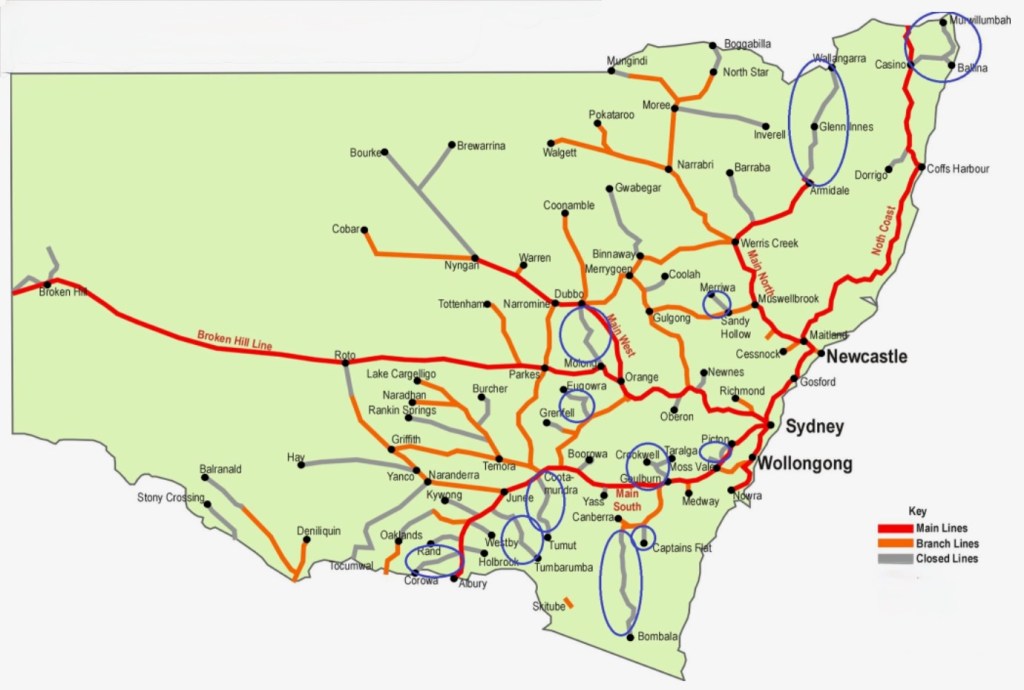
The NSW rail network has two distinct operations – Greater Sydney and Regional.
The Greater Sydney area covers Wollongong, Sydney, Central Coast and Newcastle. It is operated by Sydney Trains with electric passenger trains. Both electric and diesel locomotives are used for freight trains moving on the Sydney Trains lines.
Considerable freight is transported to Port Botany in Sydney from New England, bypassing the Port of Newcastle, at great expense to businesses, freight operators and customers in the Newcastle region.
Regional rail services cover a reduced area of NSW compared to about 1980. Passenger services are operated exclusively by NSW Trains. Freight is moved by large and small private operators. Coal and wheat generates the majority of the traffic. But the volume of container traffic is growing fast now, including between the west and east coasts, Perth – Sydney.
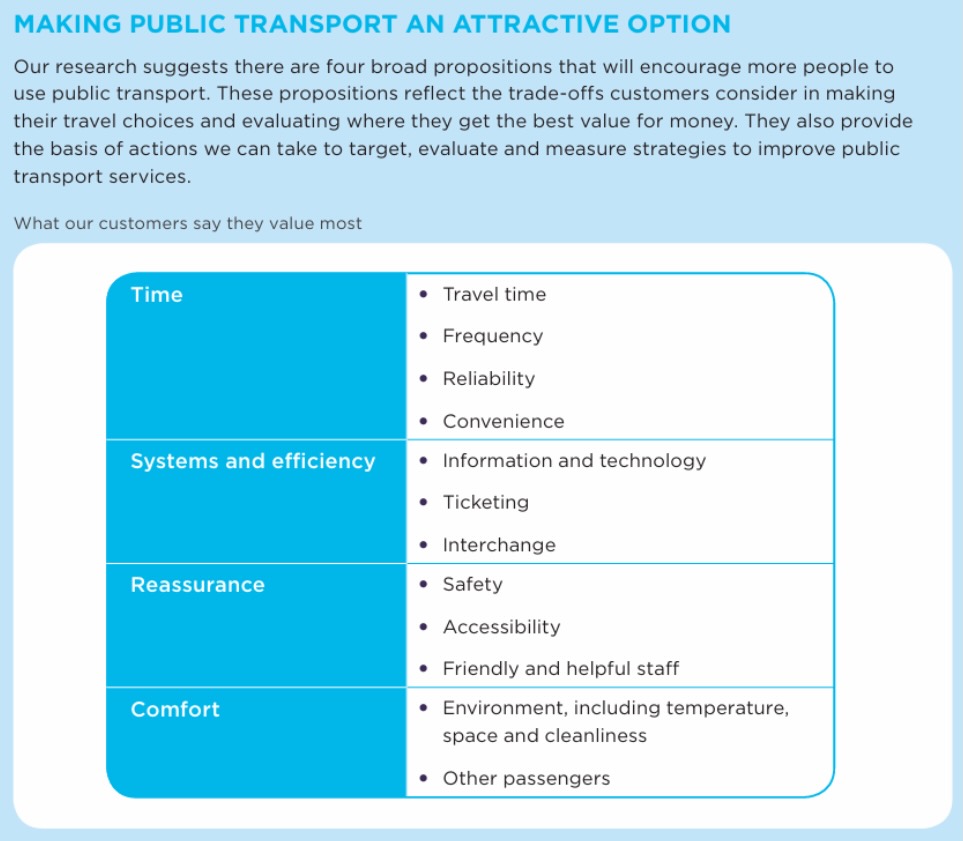
Informed commentators say that Newcastle, Narrabri, Inverell and Moree could play a much larger role in containerised rail freight movement to and through the New England region..
Bus and Coach Transport
Buses have always played a major role in meeting the transport needs of the New England. However buses arrived about 50 years behind trains. Sydney got it first two 18 seat buses in 1905. It was not until 1930 that steel buses were built in Newcastle and entered service in regional NSW. These buses proved to be so successful that a bus tax was introduced.
Edwards Coaches from Armidale was established in 1957 and now operate a fleet of about 40 buses and coaches on school, route and charter services.
The New England was a popular route for interstate services for a number of competing private operators. They were well patronised and the overnight service very popular. Some of the coaches even provided a freight service. The transport restrictions related to Covid-19 required those services to be suspended. Whilst some services on the Pacific Highway route have been re-instated there are currently no coach services to the New England from Sydney.
NSW Trains does offer some coach services that connect with the passenger rail services from Sydney at Armidale.
There are no bus or coach services between Armidale and the local airport.
One of the only inter twon bus services is between Armidal and Guyra.
Community Bus Transport
Some schools and clubs operate local buses for their organisations and members but only within the New England.
Naming of Bus Routes
TfNSW are implementing the Transport Connected Bus program, using technologies to enable real-time tracking of school bus services, customer information and student counting functions. School bus route numbers will also be standardised across the state and in the New England region this means only route numbers will be display
Naming of Bus Routes
Further information can be found at http://transportnsw.info/…/using-public…/school-travel
School travel assistance is available in the form of subsidies or passes, depending on where the student lives and the availability of public transport.
School Opal cards are not available in the New England so school travel passes are still available.
Eligible students can receive free travel to and from school/TAFE on approved train or bus routes during term times. However there are very few options in the New England area presently.
If the student doesn’t qualify for free school travel, they may be able to get discounted travel on buses between home and school. Term Bus Passes are very rare in the New England because of the very limited bus and train options available today.
The School Drive Subsidy may be available where there is no public transport available. This subsidy partly offsets the cost for driving students to school or to the nearest transport pick-up point, by car, motorcycle or boat.
Assistance for boarding school students may be available to eligible boarding school students. They can apply for free daily or weekend/vacation travel on NSW TrainLink rail and coach services for visits to and from home. Boarding school students may also be eligible for the School Drive Subsidy
New England residents may be eligible to apply for a Boarder Rail Pass or a Long Distance Coach Travel Subsidy from TfNSW.
Students with a disability who are unable to travel to and from school under the School Student Transport Scheme may be eligible for assistance under the NSW Education Assisted School Travel Program.
When travelling outside of school wonpublic transport other than between home and school, children aged 4 to 15 years are entitled to concession travel. Secondary students aged 16 years and over also pay concession fares with their proof of entitlement card.
Community Transport
Both the NSW and Australian governments provide resources to deliver Community Transport across the New England region. These resources are distributed by organisations set up for the purpose of helping disadvantaged and less fortunate residents.Community
One of these organisations is Live Better Glen Innes Community Transport Service.
- Live Better provides community transport services to the New England area including the town of Glen Innes.
- Our community transport services are funded under the Commonwealth Home Support Program (CHSP) and NSW State Government Community Transport Program (CTP).
- The CHSP funding is based on the age care planning service area and customers provide a small contribution to use the service.
- Special requests to provide more community transport services within an aged care planning area requires a service provider to apply for special provision.
- The need for funding to provide longer distance trips has been acknowledged by the Commonwealth Government.
- The NSW Government is also aware, and this has also been brought to the attention of peak bodies by service providers and community organisations.
- A pilot project is being undertaken by the Australian Community Transport Organisation and the Department of Health and Aged Care to establish a better CHSP pricing model to serve long distance trips.
- Live Better operates the following community transport vehicles in Glen Innes with volunteer drivers:
- 4 x Sedans/SUVs
- 4 x Volunteer drivers
- No buses or paid drivers
- Live Better over delivers on funded trips under the Commonwealth and NSW Governments’ funding programs. However, demand exceeds their current funded capacity.
- Community Transport is a form of transport that is based on volunteers to transport members of the community.
- Live Better has experienced a substantial decrease in volunteers after COVID and a diminishing cohort of volunteers to volunteer their time as community transport drivers.
- Group trips are prioritised over individual trips to maximise the number of customers that can be supported by the service.
Residents of the New England region can find their local operator by following these steps:
- Visit the transport operators page at https://transportnsw.info/operators
- Filter by Mode and choose ‘Community Transport’.
- Filter by Region to find Community Transport in your area.
- Narrow the results by entering the suburb or locality in the Transport Operators search field.
- The results, including website and contact details, will appear in alphabetical order.
- Click through to the operator’s website or call the phone number displayed for more information.
Flying
General aviation provide services at great cost, to airstrips at Armidale, Inverell, Glen Innes and Tenterfield. Air services at Wellcamp (Toowoomba) and Tamworth are also used extensively by New England residents.
Commercial airlines offer passenger services to Brisbane and Sydney and some smaller centres. Commercial flights are expensive and services very limited and inflexible.
The current suspension of Rex services has reduced flight availability and increased cost of flying.
There is some air freight movement.
The recent closure of the Armidale airstrip due to pavement defects caused extensive cancellation of scheduled flights. This interruption to services identified the issue that there is not an alternate mode available. The workaround became the use of private cars, bus shuttle service to Tamworth Airport and some adjustment to rail services and passenger capacity. This proved to be very inconvenient, time delaying, many missed opportunities and extra costs to residents and business in the New England.
Charter flights, air agriculture services, aircraft maintenance and training are supported by some of the air strips.
Active Transport
Walking is an integral part of the transport system and day-to-day mobility. Walking provides an important role in bringing people out into the community for a wide range of reasons, be it travelling to work, school, visiting local facilities, getting to public transport or walking for fitness and recreation. Walking is one of our most social, accessible and sustainable modes of transport. Most individual trips, whatever the primary mode used, begin and / or finish with a walk section, so that walking is a fundamental component of all travel.
As with most regional areas many people work from premises such as farms, shed, depots, etc, located at home or nearby. This distorts the statistics of active tranmsport significantly.
Pedestrians form the largest single road user group. Walking provides a range of benefits to both individuals and society, as a whole, ranging from health and fitness, economic including tourism, and environmental. Walking is a form of transport that has negligible environmental impact.
The importance and benefits of walking are recognised within our communities, and it is commonly acknowledged that further actions are needed in order to provide for safe and convenient walking. Pedestrian Access Mobility Plans (PAMP) are aimed at not only promoting walking but also reducing the incidence and severity of pedestrian mishaps.
PAMPs are rarely of benefit to people working from home in the New England however there is considerable potential for recreational walking, jogging, and cycle riding.
PAMPs drive upgrades include new footpaths, new cycleways and improved safety features that will encourage people to walk or cycle or be more mobile and help to relieve pressure on our roads and public transport networks.
PAMPs being part of a healthy lifestyle for NSW communities may qualify for funding assistance. The “Get NSW Active 2023/24” annual program allocated $13.6 million of funding for regional projects in that period.
An important feature of Active Transport programs is supporting multimodal journeys by integrating active and public transport. The absence of rail and limited bus routes severely limits active transport options in New England.
Active Transport focus areas are;
- Enable 15-minute neighbourhoods
- Deliver connected and continuous cycling and shared pathway networks
- Provide safer and better precincts and main streets.
- Promote walking and riding and encourage behaviour change
- Support our partners and accelerate change.
The Active Transport package identifies the benefits derived by per kilometre travelled by an individual in rural areas is: −
Walking: $6.21
Cycling: $1.94
E-bike: $1.80
The usage and benefits of mis-named “Rail Trails” (because the railway lines have usually been removed) as a form of Active Transport in NSW do not seem to meet the forecasts used in business plans written to gain financial assitance for the nSW Govt.
Figures presented on the Tweed Rail Trail website for April – June quarter 2024 indicate a noticeable decline in numbers of users from quarters April – June 2023 to April – June 2024.
For the period 2023 April 1 to June 30 the report showed the monthly average 17,187 users, the weekly average as 3,966 users and the daily average as 567 users.
By comparison for the period 2024 April 1 to June 30 the report showed the monthly average 6,684 users, the weekly average 1,543 users and the daily average as 220 users.
The considerable decline between the same quarter of 2023 and 2024 (April to June) must put into question the real benefit to local businesses of simply having a recreational path for cycling and walking only, on what was formerly a rail line offering both freight and passenger services
The New England region needs to have both passneger rail services and a recreational path sharing the railway corridor for the varied travel and freight needs of our community and visitors to the New England region.
Active Transport will benefit from dual use as regular train service can transport people faster over longer distances, in comfort and safety. Passenger trains will carry people, their luggage, prams, bikes, skateboard and wheelchairs. With frequenr services people can plan to visit other towns along the line, for journeys to work or sport, go shopping, visit friends, sightseeing or have a couple of drinks and get home safely, with an electric minibus connection from the station. But riding a bike or walking provides limited options, especially for the elderly. It is vulnerable to weather, distance and daylight hours mostly and the health and fitness of the person engaged in the activity. Clearly the New England region should have both low emission freight, passenger and heritage trains and an off-formation recreational path, sharing the side of the valuable rail corridor.
In locations where a recreational pathway prevents or restricts the operation of a train service the potential economic loss caused by the recreational pathway must be deducted from the freight and passenger revenue lost because trains can no longer run there.
On top of these declining figures from the North Coast Region of NSW, a report by the Northern Regional Joint Organisation of Councils (NRJO) has revealed that to extend a rail trail between Lismore and Yelgun (or Crabbes Creek) will cost between $87.5 and $94.5 million or about $150 million per kilometre. This is similar to the cost to bring rail services back to that section.
Rick Banyard
Project Director
New England Network
3-jun-2025
